

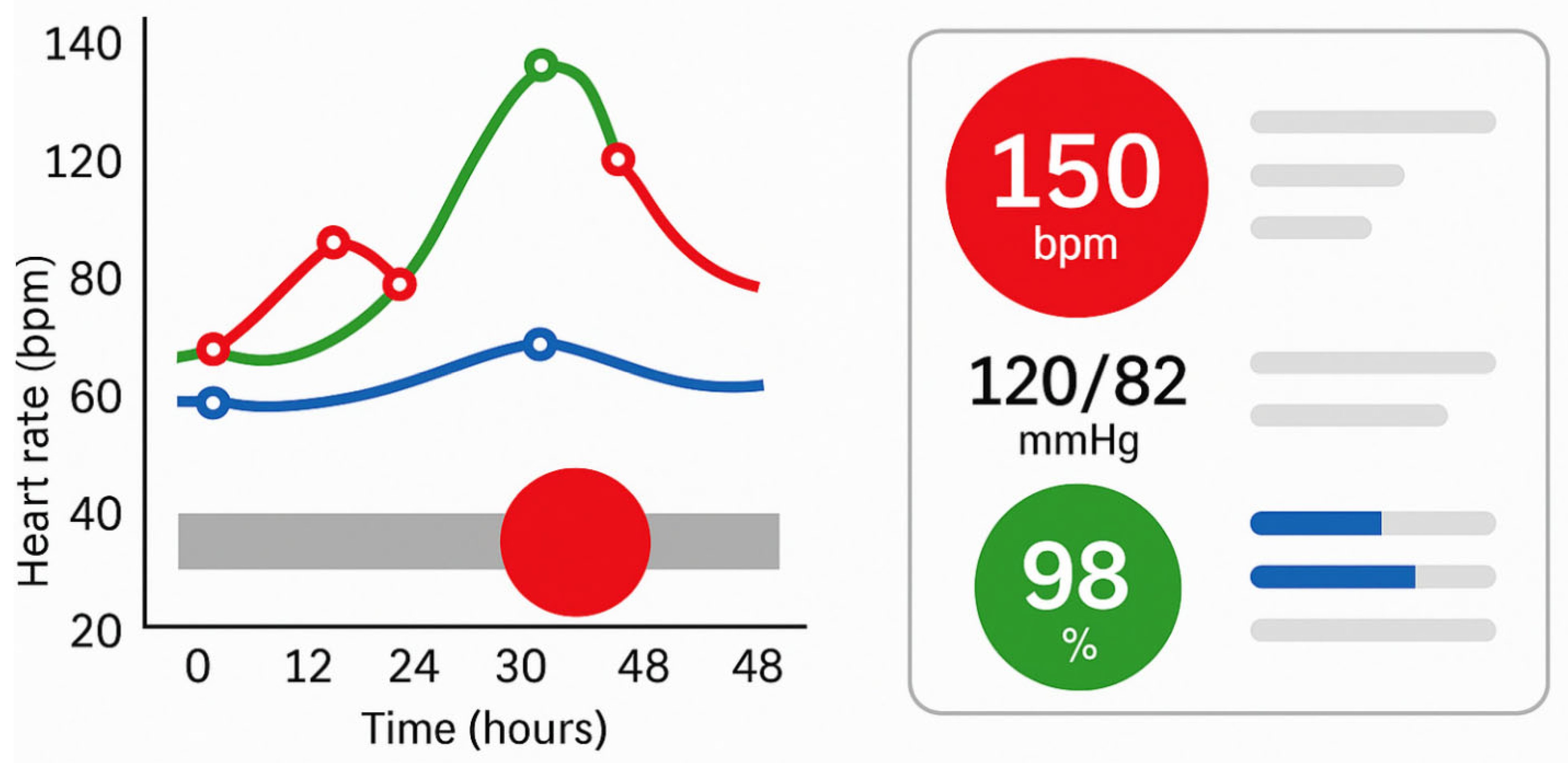
Imagine walking into a grand library where every book is stacked in perfect order. Yet instead of titles, the spines are covered in random colors and symbols. The information is present, but your eyes do not know where to look. This is what happens when preattentive attributes are misused in data visualizations. Our brains rely on very fast visual cues to decide what is important. When these cues are poorly designed, the viewer is left confused, misled, or overwhelmed.
In the world of data communication, visuals are not merely decorative. They carry meaning faster than language. When done right, they illuminate insights instantly. When done wrong, they distort the story.
Before exploring how misuse occurs, consider that many learners today begin their journey toward visual literacy while studying concepts in a data analytics course. Visual design becomes just as critical as analytical logic. Understanding how preattentive attributes guide attention allows one to create clarity rather than chaos.
The Invisible Language of Attention
Preattentive attributes like color, size, orientation, shape, and spatial grouping guide the viewer’s eyes before conscious thought even begins. They whisper softly, telling the viewer what to notice first.
The problem begins when designers assume these attributes will always be interpreted correctly. For example, using multiple bright colors to represent categories that do not need to be compared can fragment attention. If everything seems important, nothing is important. A visual that was supposed to tell a simple story now asks the viewer to solve a puzzle.
This silent confusion often goes unnoticed because the viewer may not realize why they are struggling. The message is lost in visual noise.
Color: The Most Abused Messenger
Color is powerful because it signals urgency, grouping, and difference. Yet when color is misused, the viewer loses the storyline. A heatmap with ten gradients of red suggests ten levels of urgency, even if the underlying data only requires three. Likewise, using green and red in contexts where cultural associations differ can lead to misinterpretation.
To use color responsibly:
- Limit the palette to what the story needs.
- Let contrast highlight only the key message.
- Choose palettes based on the emotional tone of the narrative.
In a professional setting such as one taught in a data analyst course in pune, students are often shown how color can misdirect strategic conclusions when not applied with intent.
Size and Scale: Subtle Yet Influential
Size commands importance. Larger shapes feel dominant. Smaller shapes fade into the background. This is a preattentive response so strong that it can override numerical interpretation.
Problems arise when the scale does not accurately represent differences in values. A bubble that is twice the diameter is not twice the area. A bar that stretches dramatically may visually exaggerate a difference that is small in reality.
Correcting scale misuse means:
- Base visual size on proportional mathematical scaling.
- Do not elongate elements only to make a chart look more dramatic.
- Maintain a zero baseline in bar charts unless there is a valid reason not to.
This discipline requires patience and honesty in representation.
Clutter: When Everything Speaks at Once
Clutter is not just an aesthetic problem. It is a cognitive burden. Every extra line, symbol, or label demands attention. When the viewer is forced to sift through unnecessary elements, comprehension slows and frustration grows.
To reduce clutter:
- Remove any element that does not directly support the key message.
- Prioritize whitespace as a tool for guiding focus.
- Let the visualization breathe.
This is often where learners practicing visual storytelling in a data analytics course realize that simplicity is not the absence of effort but the result of intentional decision making.
Spatial Position and Grouping: Where We Expect Meaning
Humans are natural pattern seekers. When two elements are close to each other, the mind assumes they are related. When spacing is even, the eye expects consistent relationships.
Misuse occurs when spacing is inconsistent or grouping feels arbitrary. For example, placing unrelated categories side by side may suggest a comparison that does not exist. Proper spacing encourages the viewer to follow the story in the correct order.
Good design leads the eye. Poor design forces the eye to wander.
Conclusion: Designing With Respect for the Viewer
Preattentive attributes are powerful because they work faster than language. They shape understanding before logic has time to engage. This is why their misuse is not a minor artistic issue but a distortion of meaning.
By choosing color intentionally, scaling elements honestly, eliminating clutter, and grouping content with purpose, designers honor the viewer’s time and intelligence. In professional environments, such as students progressing through a data analyst course in pune, these visual principles form the foundation of truthful and compelling communication.
Good visualization does not shout. It guides. It does not overwhelm. It clarifies. It respects the human mind’s natural rhythm of seeing, perceiving, and understanding.
Business Name: ExcelR – Data Science, Data Analyst Course Training
Address: 1st Floor, East Court Phoenix Market City, F-02, Clover Park, Viman Nagar, Pune, Maharashtra 411014
Phone Number: 096997 53213
Email Id: enquiry@excelr.com
